

Arangetram
In Tamil arangu means "stage" and etram means "to ascent". Its literal translation is "climbing or ascending the stage". A debut solo performance in which the student becomes a full-fledged performer.
The repertoire of this debut concert, known in Sanskrit as margam, meaning "path," typically consists of 6-7 types of items: Alarippu, Jatiswaram, Shabdam, Varnam, Padam, and/or Javali/Ashtapadi, along with Tillana.
The first two pieces are "pure" dance compositions that do not convey any narrative. They highlight the beauty of dance steps and poses, showcasing embodied rhythm and music. In the subsequent pieces, "pure" dance seamlessly intertwines with storytelling, employing expressions that communicate emotions. Hand gestures, eye movements, and the entire body work together to tell a story, immersing both the dancer and the audience in various emotional states.
The legendary dancer Balasaraswati famously described the classical dance repertoire as "spirituality revealed through physicality." She likened the traditional sequence of pieces in a classical dance concert to entering a temple:
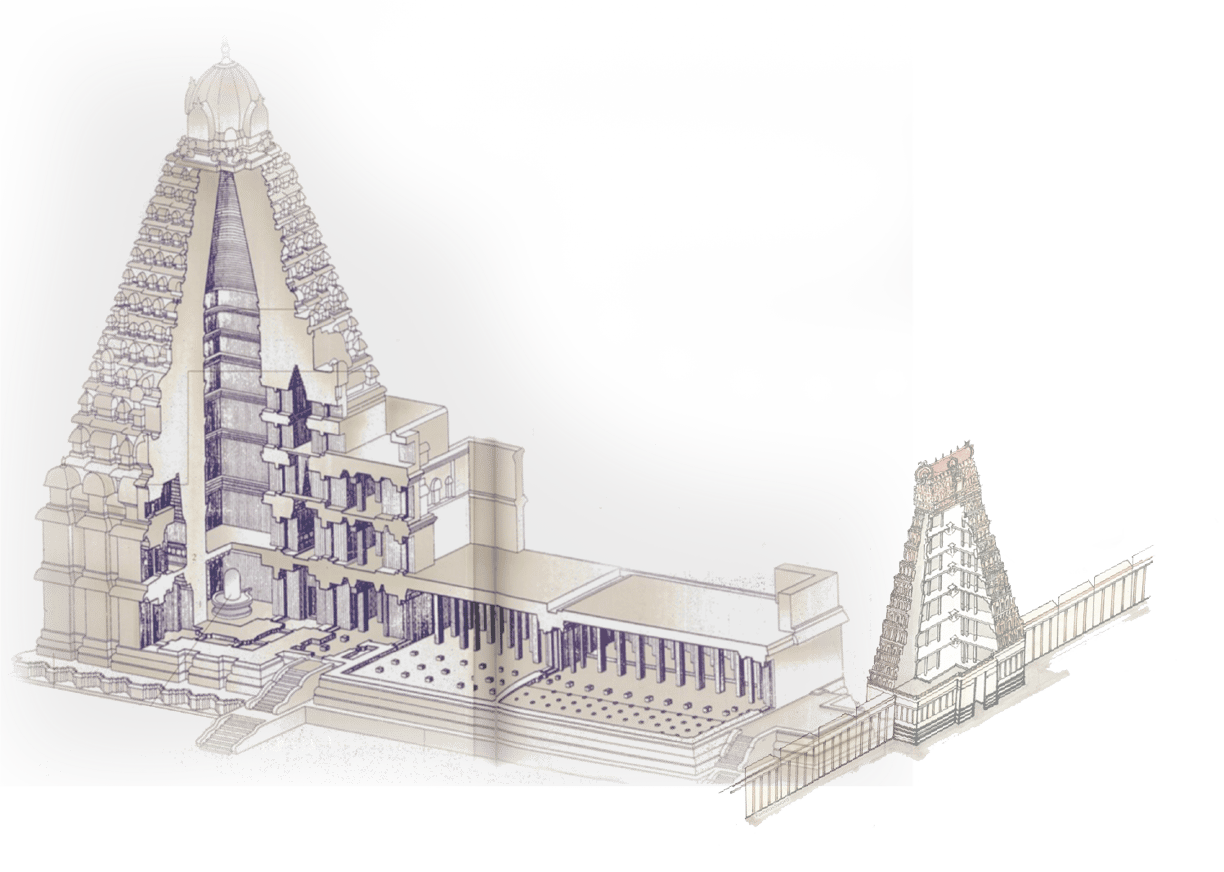
1
2
3
4
"We enter through the (1) Gopuram (outer hall) of Alarippu, cross the (2) Ardha mantapam (half-way hall) of Jatiswaram, then the (3) Mantapa (great hall) of Sabdam, and enter the (4) holy precinct of the deity in the Varnam. [...] ascading lights of worship are withdrawn and the drum beats die down to the simple and solemn chanting of scared verses in the closeness of God. “
Movement and rhythm exist everywhere — in the gusts of wind, the flow of water, the flickering tongues of fire, and even in space itself, which, according to Indian cosmology, is regarded as the first created element. Even an apparently immobile stone is made of dancing molecules.
Movement is the foundation of life, manifesting in physical, emotional, cognitive (thinking, knowing), social, and spiritual forms. This holistic worldview is deeply embedded in the ancient performing arts of India.
Dr. Rajyashree Ramesh has combined the vocabulary of classical Indian dance with the Laban/Bartenieff movement analysis system and functional anatomical knowledge and the role of connective tissue in movement, resulting in the FasciaNatya methodology.
The awareness of the moving body fosters a deeper, more effective, and healthier dance practice. Understanding the dynamics of feelings and emotions enhances the expressiveness of the theatrical aspects of classical dance. A performer who is attuned to when their body widdens, elongates, or narrows—who truly experiences the weight of emotion, time, and space—is better equipped to convey the aesthetic beauty of the dance theater tradition, establishing a profound connection with the audience, sharing the journey of the stories they tell.
FasciaNatya
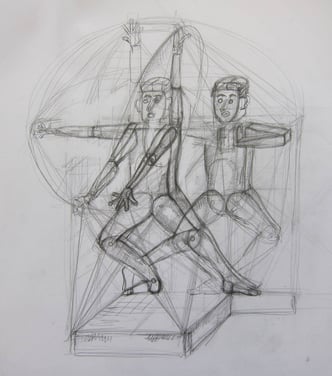
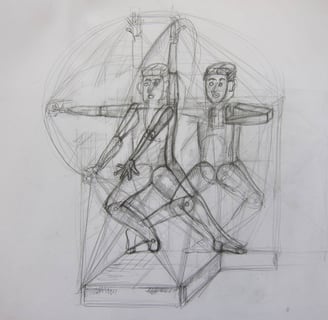
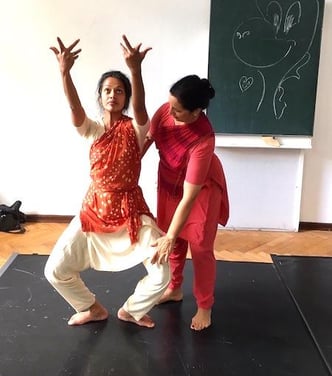
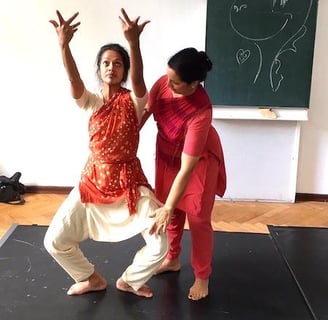
"When movement becomes the driving force, every rhythm, emotion, narrative, idea, concept transmutes, becoming meaningful in varied ways as it emerges forth as a tangible embodied entity. So dance!" - dr. Rajyashree Ramesh
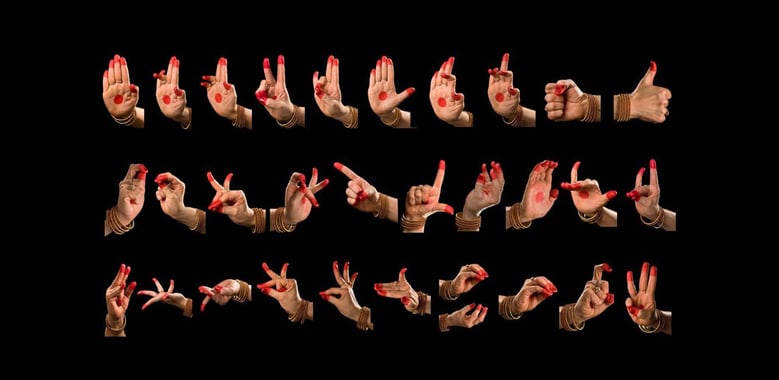
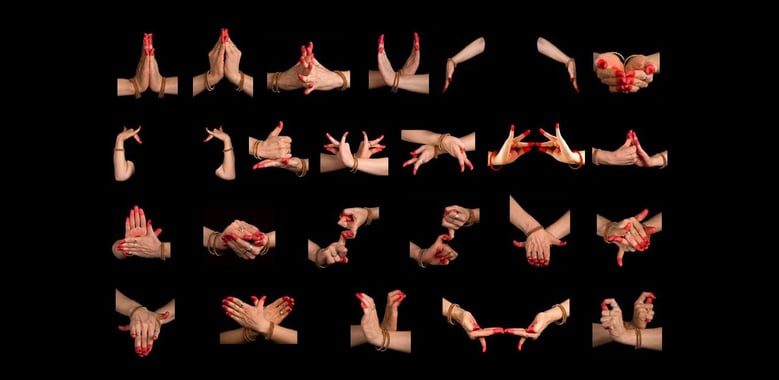
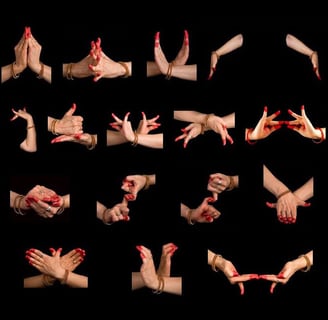
(from Sanskrit, where hasta means hand and mudra means sign) refers to the "alphabet" of gestures used in all classical Indian dances. Alongside facial expressions and body language, hand gestures serve as storytellers, enhancing the narrative or embellishing the choreography.
These hand gestures are categorized into 28 single-hand gestures, each conveying specific meanings. While they can be expressed with one hand, both hands may also be employed (for example, when forming a fist, you show the one-handed gesture Mushti. This gesture can signify grabbing, holding hair or clothing with one hand, embodying courage, or representing physical strength and fighting spirit by positioning both fists at the shoulders in a "bodybuilder's pose").
Hasta Mudra
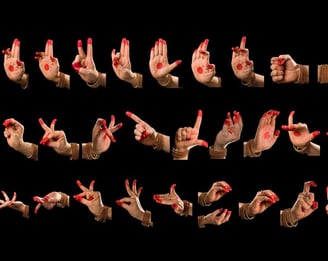
The second category includes 24 gestures utilizing both hands (for example, Garuda Hasta involves crossing the palms at the thumbs to depict both ordinary birds and the mythical eagle upon which the god Vishnu rides). If one attempts to show these gestures with just one hand, they either lose their intended meaning or convey an entirely different meaning. For instance, if you remove one hand from the Garuda gesture, it will represent Ardhachandra - the moon or a weapon instead of a bird.

Ardhachandra
Mushti
Garuda
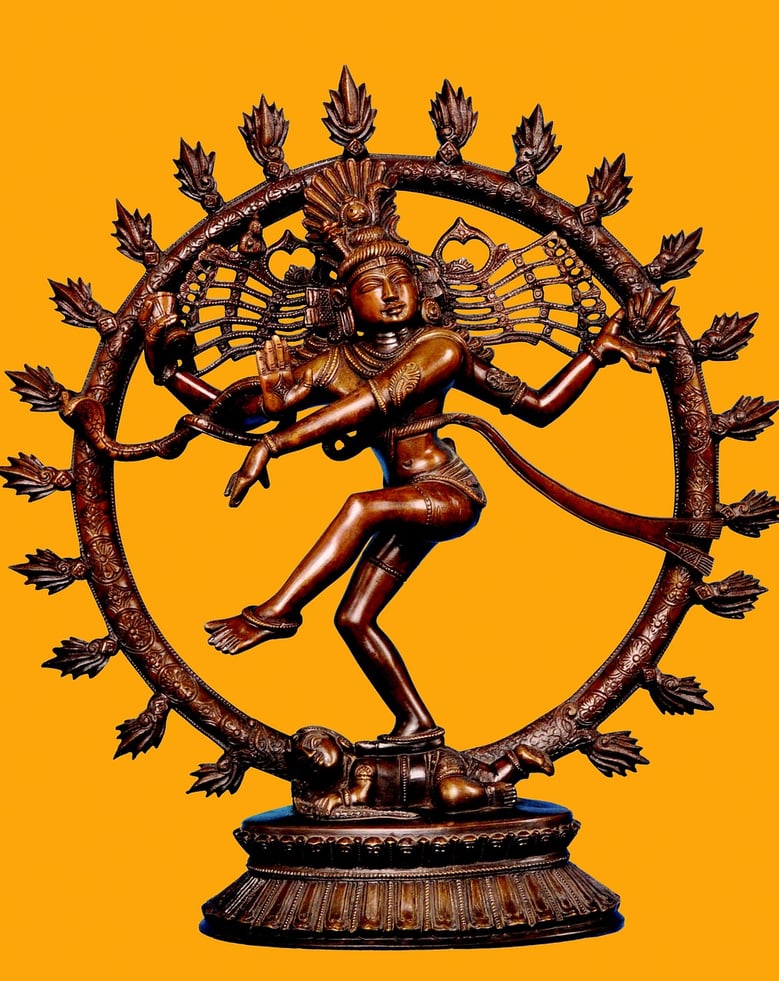
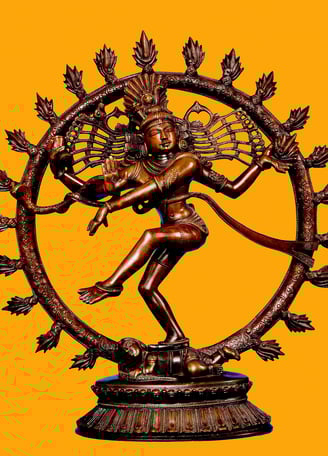
(from Sanskrit, where nata means dancer or actor and raja means king) depicts Lord Shiva as the embodiment of cosmic energy, responsible for the creation, sustenance, and destruction of entire universes during His Cosmic Dance. This representation of Shiva as Nataraja, the King of Dancers, encapsulates a profound union of myth, art, and science.
Nataraja
(1) Goddess Ganga
When the cosmic river Ganga was asked to descend to Earth, Shiva restrained its tremendous current — which could have devastated the Earth — by allowing it to flow through his hair. This symbolizes the mastery and control of energy.
(3) Earrings
Shiva’s earrings symbolize the connection between "masculine" and "feminine" energies, highlighting the balance and duality inherent in the universe.
(5) Small Drum
In one of his right hands, Shiva holds an hourglass-shaped drum, which provides the rhythm for his dance. This drum symbolizes the primordial vibration that gives rise to all creation.
(4) Disheveled Hair
Shiva's hair signifies a rejection of societal norms and conventions, embodying asceticism and the untamed spirit of dance.
(7) Front Hands
Shiva’s right hand is raised in the abhaya mudra, a gesture of reassurance that signifies the removal of fear and the maintenance of order and balance. The left hand gestures toward his left leg, symbolizing liberation from material and gravital forces.
(6) Flame
In one of his left hands, Shiva wields a flame, representing the all-consuming fire that completes the cycle of the universe's existence.
(8) Snakes
The snakes entwined around Shiva’s neck and arms symbolise reincarnation. By mastering these dangerous creatures, Shiva transcends the cycle of birth and death.
(9) Legs
The raised left leg illustrates defiance of gravity and liberation from the material constraints of life and death. The other leg stands firmly on a demon, symbolizing ignorance and ego.
(2) Crescent Moon
The crescent moon nestled in Shiva's hair represents Kama, the god of love, veiled in the dark of the night. The waxing and waning of the moon serves as a metaphor for the cyclical nature of life.
(10) Wheel
The wheel, adorned with symbols of fire, water, earth, and air, represents the material universe. According to the philosopher and writer Aldous Huxley, it embodies the interplay of mass, time, space, and energy.
In 2004, a statue of Nataraja, the King of the Dancers, was unveiled at the European Organization for Nuclear Research (CERN) in Switzerland. This statue serves as a symbol of the connection drawn by Carl Sagan between Nataraja and the cosmic dance of subatomic particles, which encompasses mass, space, and time. Sagan expressed his amazement that Hinduism uniquely recognized the perpetual cycle of birth and death within the universe, reflecting the cosmic dance of Nataraja—a dance representing the continuous flow and transformation of energy. This cycle of creation and destruction unfolds in both the microcosm and macrocosm. As the dancer creates and destroys forms through the rhythm of his movement, subatomic particles similarly "dance," interacting with space, mass, and time, and contribute to the dynamic changes occurring throughout the universe.
Nataraja and CERN
1
2
3
4
5
6
7
8
9
10
(from abhi meaning towards and nii meaning leading) refers to the art of expression. The term can be directly translated as "leading the viewer towards an emotional experience."
Abhinaya
Abhinaya encompasses several main components:
Āṅgika Abhinaya: This involves movements of the limbs, including the head, neck, torso, and facial expressions. It also includes hand gestures known as hasta mudras.
Vāchika Abhinaya: This type refers to linguistic expressions used in theatrical performances and songs, conveying narratives and emotions through spoken word.
Āhārya Abhinaya: This aspect includes costumes, decorations, and lighting design, all of which contribute to the visual storytelling in a performance.
Sāttvika Abhinaya: This represents pure expression arising from the connection between the performer and the audience. Through authentic experiences, the performer elicits an empathetic response, fostering a deep emotional engagement with the audience.
Lokadharmi and Natyadharmi Abhinaya: The former denotes realistic, non-stylized expression, while the latter refers to poetic and stylized expression governed by established rules of expression. The artist's objective is to navigate and balance between these canonical expression (Natyaadharmi) and emotional authenticity or realism (Lokadharmi).
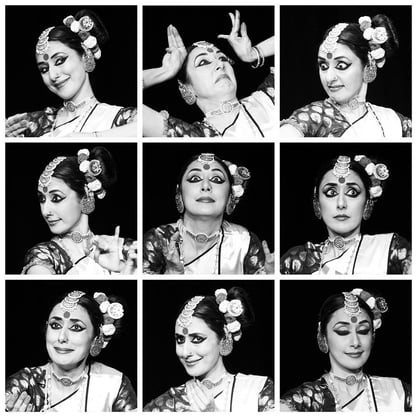
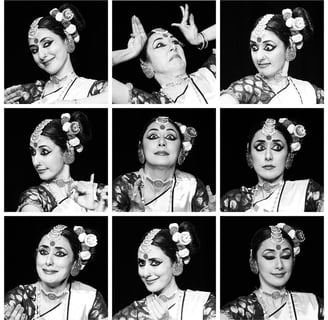
Bhava
Meaning state or mood, refers to an emotional condition that "infuses" the meaning of the work into the hearts of the audience. The Natya Shastra, a foundational text on the classical performing arts, identifies 49 emotional states, categorized into 8 primary emotions, 33 intermediate emotions, and 8 bodily emotions.
Each emotional state has specific factors that elicit the emotion, such as situations, memories, smells, or sounds, and consequences that manifest physically (e.g., shivering, goosebumps or rapid breathing).
To convey these emotional states effectively, Rasa is essential.
Rasa
Derived from the term rasah, meaning essence, relish, or taste, Rasa refers to the aesthetic pleasure and catharsis experienced by the audience.
According to the Natya Shastra, Rasa is achieved through the interplay of various emotional states (Bhava) and their determinants. For example, Raudra Rasa (fury) emerges from Krodha Bhava (anger), which can stem from various situations of frustration, insult, or abandonment. These intermediate emotions work together to develop the plot and establish the primary mood of the performance.
Rasa becomes the juiciest, tastiest and deepest essence of the emotional state. It is a full experience of emotion with the help of art.
TIME AND PLACE
INFORMATION
ORGANISER


SPONSORS
Location on the map
November 22th., 2024
Cinema "Romuva", Laisvės av. 54
Kaunas